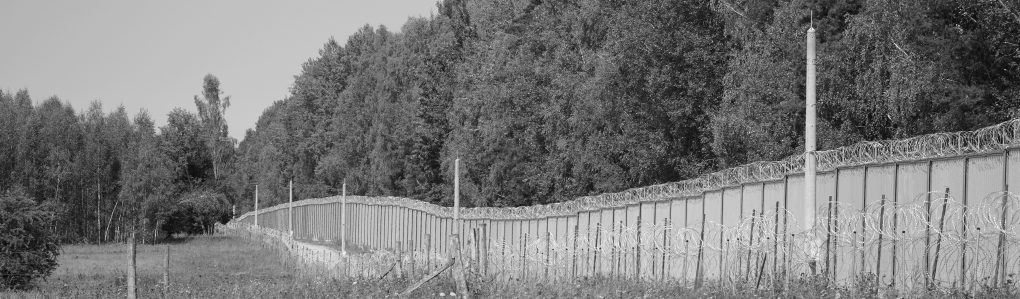
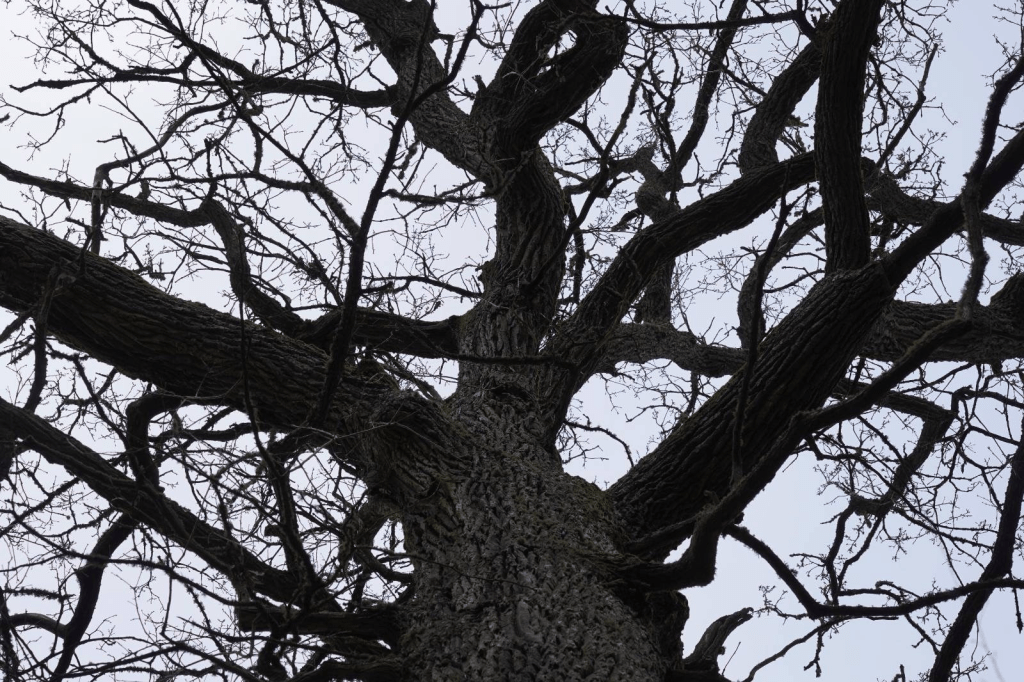
The past days have taken me to the heart of the Podlasie region, where the border between Poland and Belarus stretches through ancient, primeval forests. As part of a collaboration with the Circumference of Violence project, led by Charles Heller, we visited the Podlasie region with Reem Mussa, Allesandro Mangione, and Katarzyna Czarnota. In these woods, the trees stand like silent witnesses, their roots entwined with histories older than borders themselves. Beneath their towering canopies, a darker truth lies hidden, one of Europe’s most fortified and violent borders.
This place first entered the global spotlight in August 2021, when Belarus, under Łukaszenko, “opened” its gates, allowing people-on-the-move to journey toward Poland. While EUrope has been paying states to deal with migration; Poland accused Belarus of “instrumentalizing migration. Poland fortified its borders, erected fences, constructed roads, concertina wire cutting through the landscape and villages, while tightening laws to criminalize people-on-the-move and those who supporting them.
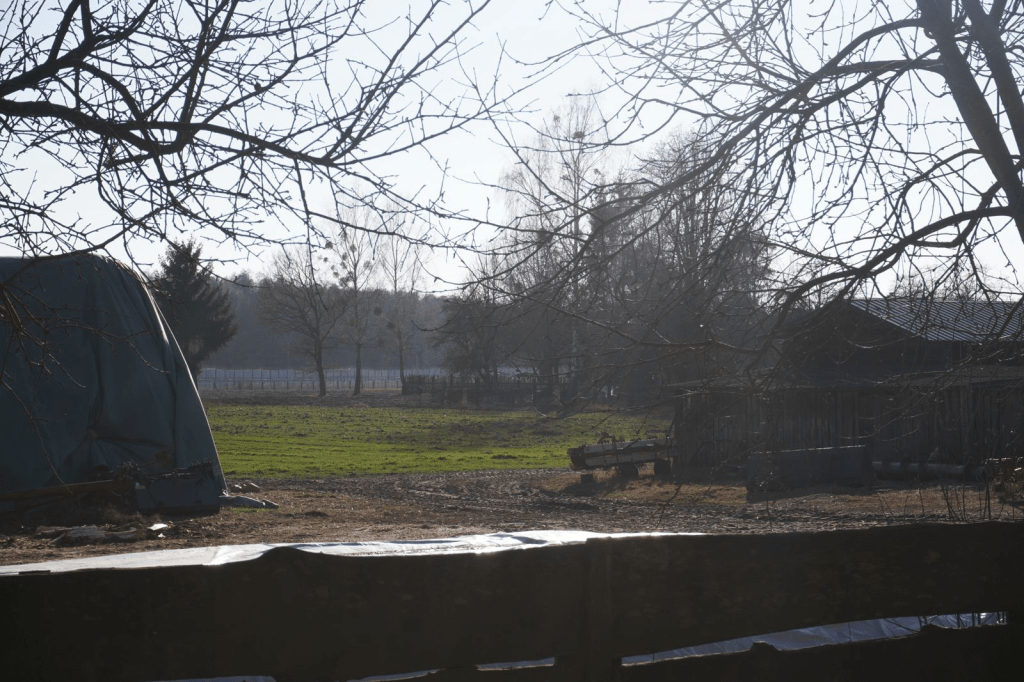
The media may have moved on since 2021, but the harsh reality continues. People-on-the-move continue to navigate this heavily surveilled and militarized frontier and face violent pushbacks. During several visits activist and civil society actors shared how violence has increased since the technocratic “liberal adminstration” of Tusk came into power in 2023. The forest however, is not just a witness, it is weaponized, where the cold, the rivers, the dense forests do the work of the border, killing, abandoning, and hiding the violence written into this landscape.
 infranature.org